
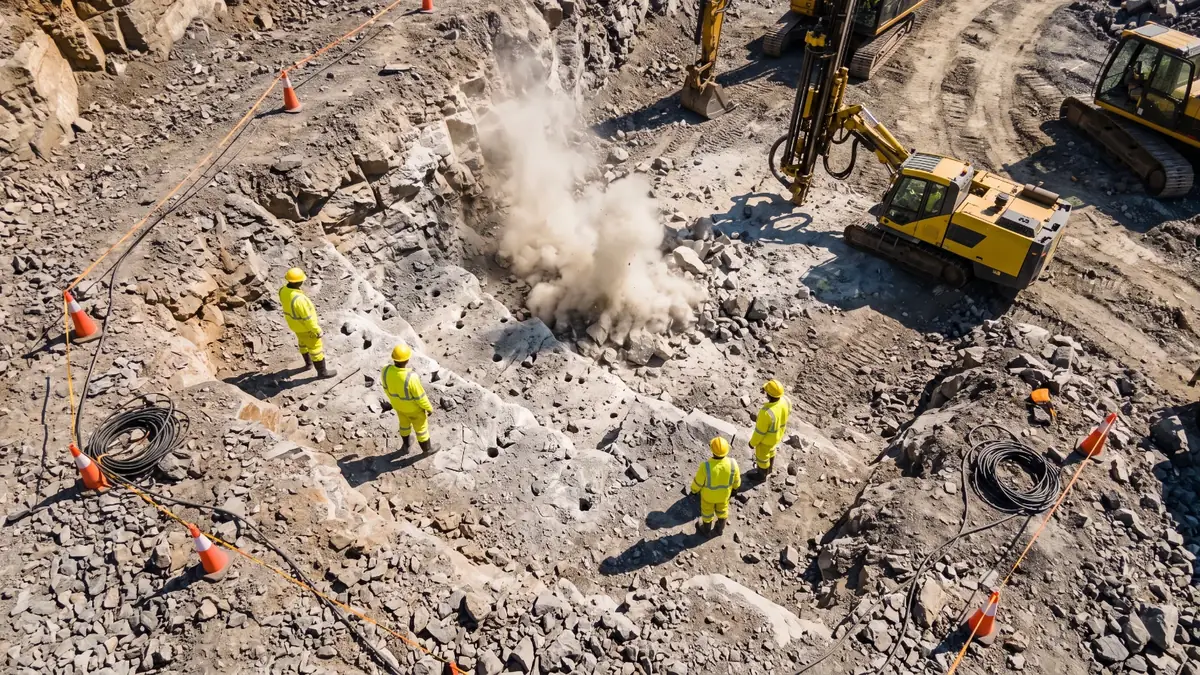
Bulk Excavation South Africa helps you find the best quote, fast. It moves the ground to the levels a building, a platform or a road needs. The part that decides the price is how much of it turns out to be rock, because soft material and hard material are different rates and often different contractors. Say the volume and the levels, and get quotations to compare.
Super easy & fast
- Know what soft and hard material should cost separately, so you never pay too much.
- Send the same levels to several contractors, and quotes come back fast.
- From LEADERR APPROVED providers, vetted and backed by many verified 5-star reviews. Peace of mind that rock is priced before it is found, not after.
Bulk Excavation Prices
Ballpark figures so you can check a quotation.
| Item | Ballpark price |
|---|---|
| Bulk excavation, per cubic metre, soft material | R55 - R145 |
| Bulk excavation, per cubic metre, intermediate | R145 - R320 |
| Bulk excavation, per cubic metre, hard rock | R420 - R1,100 |
| Cart away, per cubic metre, within 15km | R95 - R260 |
| Strip and stockpile topsoil, per cubic metre | R45 - R110 |
| Compaction of fill in layers, per cubic metre | R75 - R190 |
| Site establishment, plant and facilities | R25,000 - R180,000 |
| Typical 3,000 cubic metre platform, soft material | R220,000 - R560,000 |
Prices JUST UPDATED. Ballpark figures, rounded, excluding VAT. They reflect typical South African rock blasting, breaking and excavation rates. They are not our prices or quotations, and no provider is bound by them. Rock work is quoted on MEASURED VOLUME, and how much rock there is can only be estimated until the face is opened, so confirm what each quotation includes, such as mobilisation, whether the rate is on volume in the ground or loose, and who removes the broken rock.
Say the volume and the platform levels, and get bulk excavation quotes.
Get the Best QuoteClient Reviews
Powered by leaderr
The Three Material Classes
- Soft. Dug by an excavator without assistance. The cheapest rate and the one quoted first.
- Intermediate. Needs ripping before it can be dug. Priced between the two.
- Hard rock. Needs blasting or a hammer. Several times the soft rate.
- Who decides which it is. Normally the engineer on site, against a definition written into the contract.
- Where budgets break. A site priced as soft that turns out to be rock, halfway through the programme.
Getting the Rock Question Right First
- Have the site investigated. Test pits or boreholes before tender cost far less than a claim.
- Price all three classes. Even if you expect none of the hard, get the rate.
- Agree the measurement method. In situ survey, not truck loads, is the defensible basis.
- Agree who calls it. A written definition and a named person stops the argument on the day.
- Decide what happens to it. Blasted rock can become fill or crusher feed instead of a disposal cost.
What Else Sits in the Price
- Haul distance. Where the spoil goes is often a bigger number than digging it.
- Whether material is reused. Cut to fill on the same site is the cheapest way to move earth.
- Dewatering. A high water table changes the method and adds pumping.
- Terracing and access. A steep site needs ramps and benches before anything can be dug.
- Stormwater and erosion control. Required on most sites and easy to leave out of a quote.
Get a price for your own site rather than a range.
Get the Best QuoteWhat Affects the Price
- How much of it is rock. The single biggest variable, and the one most often unknown at quote stage.
- Total volume. Rates improve with quantity as establishment is spread further.
- Haul distance for spoil. Where the material goes can cost more than digging it.
- Whether cut balances fill. A balanced site avoids importing and disposing of material.
- Access and gradient. Steep or constrained sites are slower for every machine on them.
- Groundwater. Dewatering adds plant, time and sometimes a permit.
- Season. Wet ground slows everything and compaction becomes harder to achieve.
What to Include in Your Request
- The address. Suburb and town, so a contractor knows whether they work there.
- The volume and the levels. Existing and proposed levels, or a platform size and depth.
- Any site investigation. Test pit logs or borehole records, if you have them.
- Where spoil can go. On site, or the distance to the nearest approved disposal.
- Whether fill is needed. And whether the cut material is suitable for it.
- Your programme. Start date, and whether the site is available continuously.
Questions That Change the Number
- Are hard rock rates in the quote? If they are missing, the quote is not complete.
- How is material classification decided? Named person, written definition, agreed before work starts.
- Is cart away included and to where? Haul distance is usually the second biggest number.
- Is the measurement by survey? In situ survey, not load counts, is what holds up afterwards.
- Who handles stormwater and erosion? Often required by the council and often left out of a price.
- What is the wet weather provision? Standing time in a wet season is a real risk on a big earthmoving job.
Bulk Excavation FAQs
What does bulk excavation cost per cubic metre?
Roughly R55 to R145 for soft material, R145 to R320 for intermediate that has to be ripped, and R420 to R1,100 for hard rock. Cart away is usually separate and runs R95 to R260 a cubic metre within about 15 kilometres.
Why does rock cost so much more?
Because it has to be broken before it can be dug. That means either a blasting contractor, with design, permits and a pre-blast survey, or an excavator and hammer working at a fraction of its normal output. Either way the production rate falls sharply.
How do I avoid a rock claim?
Investigate before you tender. Test pits or boreholes cost a small fraction of what a mid contract rock claim costs, and they let you price all three material classes upfront. Then agree in writing who classifies the material and how it is measured.
Can blasted rock be used as fill?
Often, and it is usually the cheapest outcome because it avoids both a disposal cost and an import cost. The fragmentation has to suit the layer thickness being built, which means telling the blasting contractor what the rock is for before it is designed.
Is excavation measured in situ or loose?
In situ, from survey, is the defensible basis. Material bulks by roughly a quarter for soil and half again for rock once it is dug, so counting truckloads measures something quite different from what was taken out of the ground.
Do I need the levels surveyed first?
It is worth it. Without existing and proposed levels, a volume is an estimate, and every quote you receive will be priced on a different one. A survey turns a set of guesses into quotations you can compare.
How a contractor prices rock is what separates one earthmoving quote from another, so comparing those on Rock Blasting is where the money is.